-
High Priority
Small books work best at 5×8 inches (127×203 mm). The familiar 6×9 size performs better with books of 200+ pages. Choose dimensions before formatting.
-
High Priority
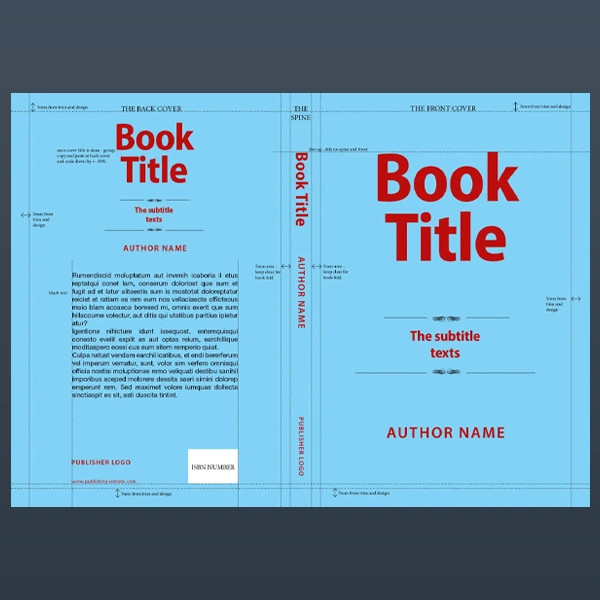
The spine width depends entirely on this number. Without a final page count — including courtesy pages — Amazon KDP will reject your paperback or hardcover cover. Format first, then design.
-
High Priority
For novels: make it memorable. For low-content books: use the right search keyword as the title. This single decision affects discoverability across all of Amazon.
-
High Priority
Most first-time authors ignore this field. It is prime keyword real estate — use it with terms that align with your genre and improve how readers find your book on Amazon.
-
High Priority
If you plan a series, think about your author brand early. How your name looks across covers matters as much as the cover itself — plan for sudden success, not just the first book.
-
High Priority
On Amazon, the blurb is just one scroll away — and readers do read it. Write it to convince without revealing too much. Many books are bought because of this text alone.
-
Medium Priority
Choose your genre based on reader feedback, not your own perception. Getting this right directly affects your keyword strategy and where your book surfaces in Amazon search.
-
High Priority
Recommended: 2,560 px tall × 1,600 px wide, JPEG at minimum 300 DPI. Designed to convert at thumbnail size — not just admired at full resolution.
-
Medium Priority
Order a physical proof copy before going live. Colors can shift depending on where Amazon prints the book — something not even KDP support can fully predict or prevent.
-
Optional
Not mandatory — but becomes necessary if you have a launch strategy and a review strategy in place. Think of it as the premium tier of your publishing plan.
-
Medium Priority
Cream or white — match the mood of your book. Horror and literary fiction lean toward cream. Clean non-fiction reads better on white. The difference is felt, not just seen.
-
Medium Priority
Use Premium Color for books with illustrations, maps, or full-page visuals. Standard Color is sufficient for black-and-white interiors with minimal colored elements.
-
Optional
Place it inside the book — at the prologue or closing pages — not on the back cover. It is a connection point with future readers, not a promotional asset.
-
High Priority
A well-written bio builds the foundation for true fans — readers who buy your next book simply because they trust you after finishing this one. Do not skip it.
-
High Priority
Add a QR code or URL both inside and on the back cover. Readers who reach your own site are yours — no commissions, no intermediaries, no algorithm between you and them.
-
Optional
As an author, you have more flexibility than a corporate brand. An illustrative or signature-style logo is not only acceptable — over time, it can become your most recognizable visual asset.
-
Optional
Buy your own ISBN only if you plan to publish on multiple platforms — that authority will follow you. If staying exclusively on Amazon, their free ISBN works perfectly well.
-
High Priority
Use AI-generated images as visual briefs for your designer — not as final assets. Imperfections do not matter. What matters is communicating the composition and mood you want clearly and quickly.
-
High Priority
Find the most memorable scene or emotion in your book and reference it visually on the cover. A small, well-placed spoiler that builds anticipation — without breaking the narrative.
-
Medium Priority
Essential for low-content books. Valuable for novels too — a solid keyword study positions your book next to the biggest titles in your category inside Amazon search results.
-
Medium Priority
This is not about buying reviews. It is about building a network of honest readers and fellow authors who support each other. Worth the investment — but not mandatory if your launch strategy is strong.
-
Medium Priority
Most successful indie launches follow the VPP method: Visibility, Presentation, Publication. Not obligatory if you already have a community — but without one, skipping this is how good books disappear.
-
High Priority
Before publishing, calculate how much you actually earn per sale. Kindle eBooks can use different royalty options depending on price and marketplace, while print books subtract printing costs from the royalty calculation.
-
Strategic Decision
KDP Select is a 90-day optional program for Kindle eBooks. It can give access to Kindle Unlimited, Free Book Promotions and Kindle Countdown Deals, but it also requires exclusivity during the enrollment period.
-
High Priority
Amazon KDP allows authors to select categories for each book. Choosing specific, relevant categories can improve discoverability and help the book compete in a more precise niche instead of disappearing in a broad market.
-
High Priority
Author Central is separate from the KDP publishing dashboard. It lets you create your public Amazon Author Page, connect your books, add your bio and help readers find your work in one place.
-
Conversion Asset
A+ Content lets authors add visual modules, formatted text and comparison sections to the Amazon book detail page. It is one of the most underused conversion assets available to indie authors.
-
Launch Boost
Kindle eBook pre-orders allow authors to promote a book before release. Pre-orders can contribute to sales rank and Kindle Store merchandising before the eBook is officially released.
-
High Priority
The free reading sample is part of the sales experience. The opening pages should be edited, formatted and structured to convince the reader that the full book is worth buying.